Online Mushroom Farming Training Course
10 AM – 1 PM · Live interactive session
Join from anywhere in India
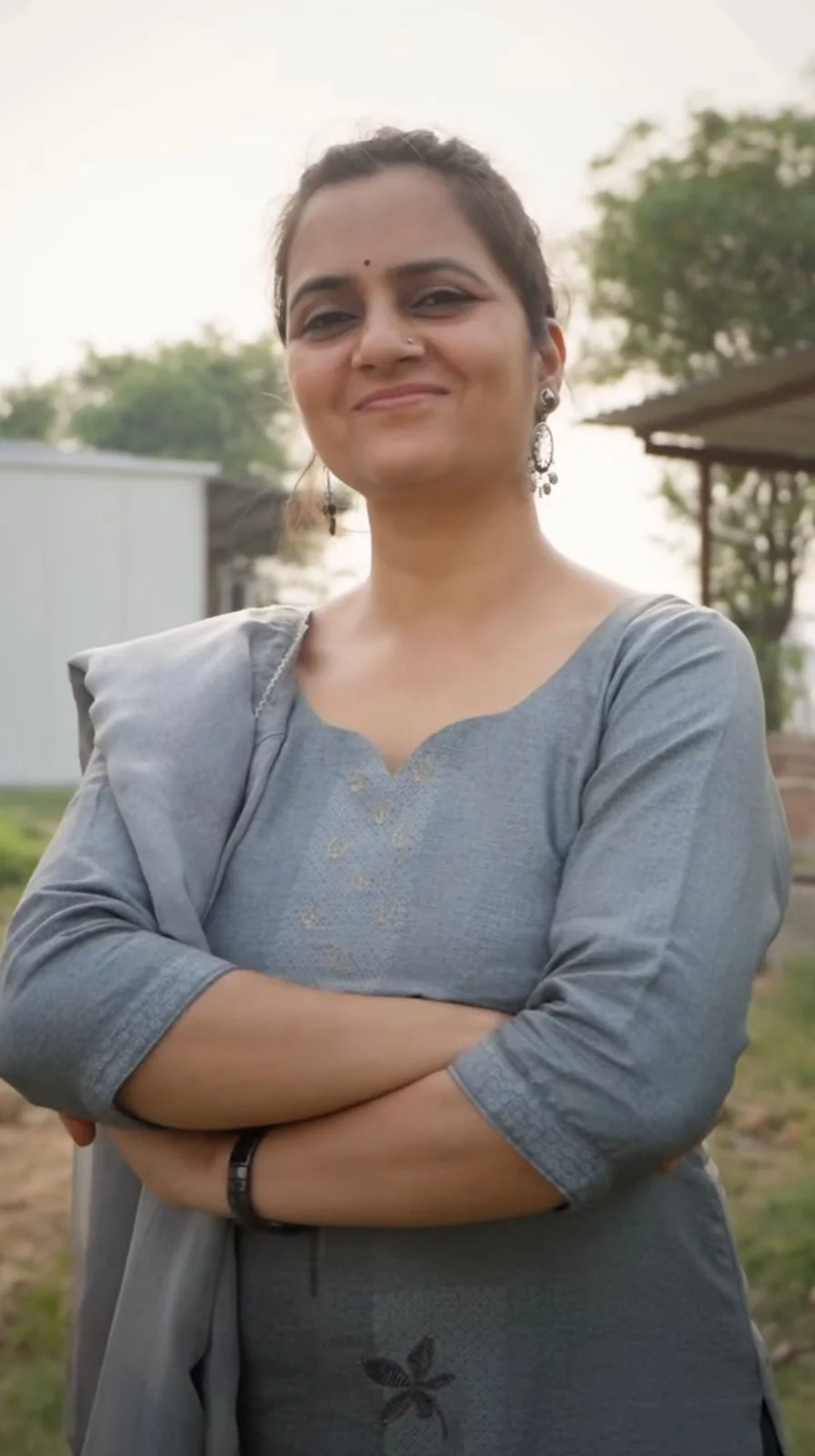
This is a live online mushroom farming course, not a recorded playlist. It runs as a single three-hour session taught by Dr. Sonia Dahiya, and it is built for one specific person: someone in India who is seriously considering a mushroom unit and wants to know what it actually takes before committing money to it.
How the three hours are spent
The session splits deliberately. Two hours of teaching, then a full hour that belongs to you alone.
The commercial crop, taught in the order you will actually do it — compost and substrate preparation, spawning, the casing layer, holding temperature and humidity, pest and disease management, then harvesting and post-harvest handling. Taught from a working farm rather than a textbook, with real figures from our own unit.
A personal question-and-answer session about your situation — your room, your district, your budget, your buyers. Generic advice is free everywhere; advice about your specific plan is not.
Which mushrooms are covered
Button mushrooms, and only button mushrooms. That is deliberate: it is what our farm grows commercially, it is the largest market in India, and it is the crop every figure in the course comes from. Oyster, milky and other varieties are not part of the course.
The business side, not just the growing
Growing mushrooms and running a mushroom business are two different skills, and the second is where most units fail. The course covers financial analysis through to business management: what a unit costs at your intended scale, what it returns, how margins move across the year, and who buys your crop locally.
What the course covers, module by module
- Introduction to button mushroom farming — the crop, the cycle, and why button dominates Indian production.
- Market analysis & profit potential — who buys, at what price, and how margins behave through the year.
- Infrastructure requirements — the room, the racks, the ventilation, and what you can defer until later.
- Substrate preparation techniques — composting, pasteurisation, and the mistakes that cost an entire crop.
- Spawn selection & quality control — choosing spawn, judging it, and storing it properly.
- Environmental controls & management — temperature, humidity and CO₂, and how to hold them without expensive equipment.
- Financial analysis & business management — costing, returns, and running the unit as a business.
Online or hands-on — which one you need
We run two courses and they are not alternatives so much as stages. Most people take the online course first.
| Online — ₹1,499 | At our farm — ₹2,000 | |
|---|---|---|
| Where | Anywhere in India, live | Our farm, Sonipat, Haryana |
| When | 3 hours (2 practical + 1 one-to-one) | 4th Sunday of the month, 11 AM – 1 PM |
| How you learn | Taught live, with slides and farm footage | Every process shown in real time on a live crop |
| Practical focus | Button mushrooms | Button mushrooms |
| Also covered | Financial analysis · business management · a digital certificate signed by Dr. Sonia Dahiya | |
| Best if | You cannot travel to Haryana | You can travel and want the deepest version |
Both cover almost the same ground. If you can get to Sonipat, the physical training is the better learning opportunity — watching compost turned and a flush picked teaches what a slide cannot. The online course exists so distance is not the reason someone does not learn.
See the hands-on farm training in Sonipat →
What about free government training?
It is the most common question we get, so here is a straight answer. Government mushroom training does exist in India, run by research institutes, agricultural universities and district farm science centres. But it is rarely free, and it is rarely there when you need it.
Seats are limited and intakes are often months apart. The national institute's courses cost ₹7,500–₹15,000 for five to nine residential days, before travel, board and the days away from work. And the schedule is set for you rather than by you. Our course exists for people who want to start now, want one specific person to answer their specific questions, and would rather not plan their year around the next intake window.
For the fuller picture on government schemes, subsidies and how to apply, see our guide to mushroom farming subsidy schemes in India.
Who teaches it
Dr. Sonia Dahiya runs a working mushroom farm at Barwasni, Sonipat. The training is drawn from that operation rather than from a syllabus — the figures quoted are the farm's own, and the problems covered are ones the farm has had to solve.
Common questions
Is this training free?
No — ₹1,499 for the online course, certificate included, and ₹2,000 for the hands-on farm training.
Do I get a certificate?
Yes. The online course comes with a digital certificate signed by Dr. Sonia Dahiya.
Do I need farming experience?
None. The course starts from first principles and assumes you have never grown a crop.
How long is the session?
Three hours, 10 AM to 1 PM — two hours of practical teaching and a final hour of one-to-one question and answer with Dr. Sonia Dahiya.
Can I join from outside Haryana?
Yes. The online course is taken by participants from across India. Only the farm training requires travelling to Sonipat.
What happens after the session?
You get WhatsApp support through your first batch, which is when most of the real questions come up. Message or call us on 9911552416 as you set up.
Next session: 29 November 2026 (Sunday)
Live online, 10 AM – 1 PM. ₹1,499.
Looking for training in your own city? See our city-by-city training guides, or read the complete guide to mushroom farming training in India.