All Government Subsidy Schemes for Mushroom Farming in India (2026)
The Indian government provides significant financial support for mushroom farming through at least 6 major schemes at the central level, plus numerous state-specific programmes. Depending on your scale, location, and category, you can reduce your initial investment by 25–50% or more.
This guide covers every available scheme with exact subsidy amounts, eligibility criteria, required documents, official application portals, and state-wise details — all in one place.
📋 Table of Contents
- Quick Comparison of All 6 Schemes
- MIDH — Mission for Integrated Development of Horticulture
- NHB — National Horticulture Board
- PMEGP — PM Employment Generation Programme
- PMFME — PM Formalisation of Micro Food Processing
- Mudra Loan (PMMY)
- Agriculture Infrastructure Fund (AIF)
- State-Wise Mushroom Subsidy Overview
- Step-by-Step: How to Apply
- Documents & Applying
- Frequently Asked Questions
What these schemes look like from the applicant’s side
The sections below are the schemes as published. This box is what we have seen actually happen, sitting with trainees at our farm in Sonipat while they prepared project reports for them. It is experience, not policy — where the two disagree, the policy wins.
- Most first-time mushroom growers end up on MIDH, not PMEGP. PMEGP is better known and attracts far more applicants, but MIDH is administered by your District Horticulture Officer, who holds horticulture funds and knows what a mushroom unit is. A file that an officer understands moves faster than one that has to be explained.
- When you apply matters as much as what you apply for. Funds are allocated at the start of the financial year and are routinely exhausted before it ends. An application walked into the DHO office in April–June has a materially better chance than the same application in January. This is the single most useful thing on this page.
- The subsidy arrives last, not first. You build the unit with your own money or a bank loan, submit bills and photographs, and the subsidy is then credited against the loan. Applicants who plan as though the subsidy funds the construction run out of cash halfway through the build. Budget the full project cost, and treat the subsidy as a rebate.
- Inflated revenue projections are what kill files. Officers have read hundreds of mushroom DPRs. A report claiming a small unit will earn a lakh a month reads as unserious and invites scrutiny of everything else in it. We tell trainees to show a modest, defensible number and let the project stand on it.
- Nobody can promise you an approval. That includes us. The decision sits with your DHO, KVIC and your bank. If someone offers a guaranteed sanction in exchange for a fee, that is the point to walk away.
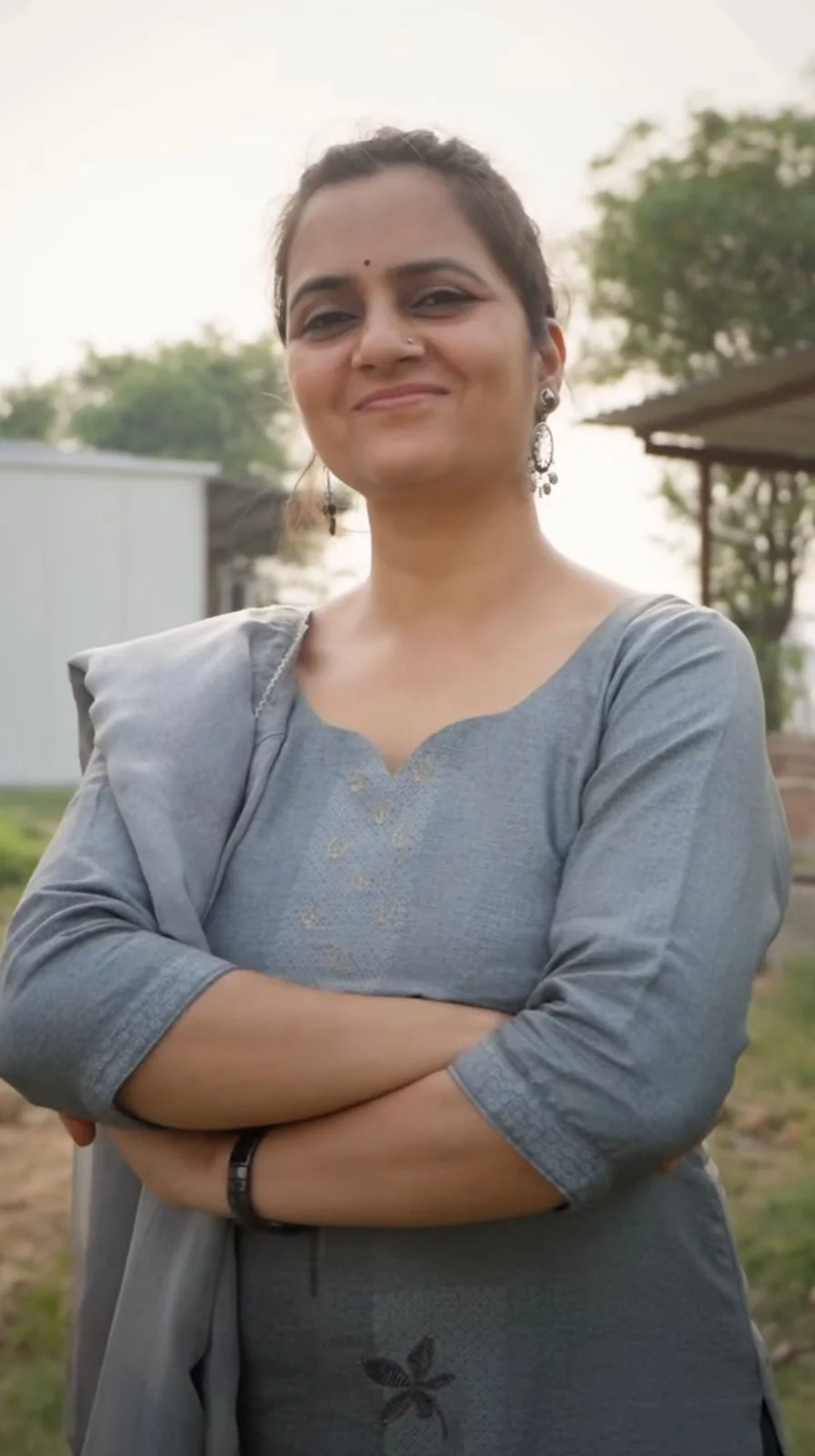
Written by Dr. Sonia Dahiya, who runs a 10,000 kg/month button mushroom unit at V.P.O Barwasni, Sonipat, Haryana, and has helped more than 200 trainees prepare project reports for these schemes. Looking for the free government training programmes rather than the subsidies? That is a separate page. For the mechanics of the paperwork, see how to apply for a mushroom farming subsidy; for the numbers that go inside the DPR, see our business plan framework and cost and profit figures from our own farm.
1. Quick Comparison — All 6 Government Schemes
Want to learn this properly? Dr. Sonia Dahiya runs a live online mushroom farming course for ₹1,499 — next session 29 November 2026 (Sunday), joinable from anywhere in India.
| Scheme | Subsidy % | Max Project Cost | Best For | Apply Via |
|---|---|---|---|---|
| MIDH | 40–50% | ₹2–30 lakh | Small & commercial mushroom production | District Horticulture Officer |
| NHB | 35–50% | Project-based | Large climate-controlled commercial units | nhb.gov.in (online) |
| PMEGP | 15–35% | ₹50 lakh (mfg) | New entrepreneurs & value-addition | kviconline.gov.in |
| PMFME | 35% | ₹10 lakh | Micro food processing & packaging | pmfme.mofpi.gov.in |
| Mudra (PMMY) | No subsidy (easy loan) | ₹20 lakh | Collateral-free loans for small units | Any bank branch |
| AIF | 3% interest subvention | ₹2 crore | Post-harvest & cold storage infrastructure | agriinfra.dac.gov.in |
2. MIDH — Mission for Integrated Development of Horticulture
MIDH is the primary central government scheme for mushroom farming subsidies in India. Administered by the Ministry of Agriculture & Farmers’ Welfare, it covers mushroom production, spawn making, and compost making units.
2.1 Small-Scale / Low-Cost Mushroom Unit
💲 Cost Norm
₹2.00 lakh per unit
📏 Unit Size
200 sq. ft. growing area
💰 Subsidy
50% of cost = ₹1.00 lakh
📊 Limit
Maximum 5 units per beneficiary
This is the easiest entry point for new farmers. With 5 units, you can get up to ₹5 lakh subsidy on a ₹10 lakh investment.
2.2 Commercial / Integrated Mushroom Units (Project Mode)
| Component | Cost Norm (Max) | General Areas | NE & Himalayan States* |
|---|---|---|---|
| Mushroom Production Unit | ₹30 lakh | 40% subsidy | 50% subsidy |
| Spawn Making Unit | ₹20 lakh | 40% subsidy | 50% subsidy |
| Compost Making Unit | ₹30 lakh | 40% subsidy | 50% subsidy |
*NE & Himalayan states include all 8 North-Eastern states, Himachal Pradesh, Jammu & Kashmir, Ladakh, and Uttarakhand. Scheduled areas and Vibrant Villages also qualify for higher rates. Public sector units get up to 100%.
2.3 How to Apply for MIDH Subsidy
- Contact your District Horticulture Officer (DHO) or State Horticulture Mission (SHM) office. They will inform you about the current year’s Annual Action Plan (AAP) and available funds for your district.
- Prepare a Detailed Project Report (DPR) covering unit specifications, cost breakup, production plan, and revenue projections.
- Secure a bank loan — since the subsidy is credit-linked (for commercial units), you must get a term loan sanctioned from a bank.
- Submit your application through the DHO/SHM with all documents. You can also check the MIDH SURAKSHA Portal for online options.
- Site inspection by horticulture department officials to verify feasibility.
- Receive approval (LOI) — do NOT start major construction before receiving this.
- Complete the project as per approved specifications.
- Joint inspection & subsidy release — the subsidy amount is released to your bank loan account.
💡 Key Point: Credit-Linked Back-Ended Subsidy
Most MIDH subsidies are “credit-linked” and “back-ended.” This means: (1) You must take a bank loan first, (2) You build/set up the project, (3) After government inspection and approval, the subsidy amount is deposited into your loan account, reducing your outstanding principal. You do NOT receive cash in hand.
3. NHB — National Horticulture Board
The NHB operates under MIDH but specifically supports larger, commercial, climate-controlled mushroom projects through its “Development of Commercial Horticulture” scheme.
3.1 What’s Covered
- Infrastructure: Insulated growing rooms, specialized flooring, doors
- Climate control & automation: Chillers, Air Handling Units (AHUs), humidification/fogging systems, environmental sensors (temperature, CO₂), steam supply
- Post-harvest: Cold storage, canning lines, primary processing equipment
3.2 Subsidy Rates
| Location | Subsidy Rate |
|---|---|
| General areas | 35–40% of project cost |
| NE Region, hilly areas, scheduled areas | Up to 50% of project cost |
3.3 How to Apply
- Prepare a professional DPR (model DPRs available on NHB website)
- Secure a term loan from a bank
- Register & apply online at nhb.gov.in
- Upload DPR, bank sanction letter, land documents (ownership or minimum 10-year lease)
- NHB conducts site inspection for technical compliance
- Subsidy released to bank loan account after project completion
✅ NHB vs MIDH — When to Choose Which?
NHB is better for large, hi-tech, climate-controlled button mushroom projects with significant automation. MIDH (via DHO) is better for small-to-medium units, oyster mushroom farms, and farmers who want simpler paperwork through their local office. Both are part of the same umbrella scheme; you cannot avail both for the same project.
4. PMEGP — Prime Minister’s Employment Generation Programme
Implemented by KVIC (Khadi & Village Industries Commission), PMEGP is one of the most popular subsidy schemes for mushroom farming. It supports new micro-enterprises in the manufacturing and service sectors.
⚠ Important: Eligibility Nuance
PMEGP is technically for non-farm manufacturing/service enterprises. Direct mushroom cultivation alone may not qualify. However, mushroom processing, value-addition, packaging, and spawn production are eligible. Many applicants successfully frame their units as “Agro-Based & Food Processing” manufacturing units. Consult your local DIC/KVIC office for guidance.
4.1 Subsidy Rates
| Category | Urban Areas | Rural Areas |
|---|---|---|
| General | 15% of project cost | 25% of project cost |
| SC / ST / OBC / Women / Ex-servicemen / PwD / NER / Hill & Border areas | 25% of project cost | 35% of project cost |
4.2 Project Limits
- Manufacturing units: Up to ₹50 lakh project cost
- Service units: Up to ₹20 lakh project cost
- Beneficiary contribution: 10% (General) or 5% (Special category)
4.3 Eligibility
- Age: 18+ years
- Education: 8th pass (for projects above ₹10 lakh)
- Must be a new unit (not expansion of existing business)
- Must NOT have availed any other government subsidy previously
- Government employees and existing income tax assessees are generally ineligible
4.4 How to Apply
- Visit kviconline.gov.in → click “PMEGP e-Portal”
- Click “Online Application for Individual”
- Fill personal details (name must match Aadhaar exactly)
- Select “Manufacturing” as project type, “Agro Based & Food Processing” as industry
- Enter project cost (must match your DPR exactly)
- Upload: Aadhaar, PAN, photo, education certificate, caste certificate (if applicable), and Project Report (DPR) as PDF
- Select implementing agency (KVIC or DIC)
- Submit & note your application ID
- KVIC/DIC officer will visit your site within 30–60 days
- After approval, bank sanctions loan. Subsidy deposited after project completion.
5. PMFME — PM Formalisation of Micro Food Processing Enterprises
Under the Ministry of Food Processing Industries, PMFME supports micro food processing units including mushroom processing, drying, packaging, and value-added products.
💰 Subsidy
35% credit-linked subsidy
💲 Max Amount
₹10 lakh per unit
👤 Your Share
Minimum 10% of project cost
🎯 ODOP
Preference for One District One Product alignment
5.1 Who Can Apply
- Existing or new micro food processing enterprise (unorganised sector)
- Age: 18+ years
- Education: Minimum 8th standard
- One person per family
- Must be willing to formalise (FSSAI registration, GST if applicable)
- Preference for units aligned with district’s ODOP (One District One Product)
5.2 SHG Support
Self-Help Groups (SHGs) can receive ₹40,000 per member as seed capital for working capital and purchase of small tools/equipment.
5.3 How to Apply
- Check ODOP status for your district at pmfme.mofpi.gov.in
- Register and fill the online application
- Prepare and upload a bankable DPR
- Secure a bank loan (subsidy is credit-linked)
- Obtain FSSAI registration at foscos.fssai.gov.in
- Complete project → inspection → subsidy release
6. Mudra Loan (PMMY — Pradhan Mantri Mudra Yojana)
Mudra is not a subsidy but provides collateral-free loans for small businesses including mushroom processing units. It’s the easiest way to get funded without pledging property.
| Category | Loan Amount | Collateral | Best For |
|---|---|---|---|
| Shishu | Up to ₹50,000 | None | Micro-scale beginners |
| Kishor | ₹50,001 – ₹5,00,000 | None | Small mushroom farms |
| Tarun | ₹5,00,001 – ₹10,00,000 | May be required | Medium commercial units |
| Tarun Plus | ₹10,00,001 – ₹20,00,000 | May be required | Large operations |
How to apply: Visit any commercial bank, RRB (Regional Rural Bank), or microfinance institution with a clear business plan and identity documents. No separate portal — apply directly at the bank branch.
💡 Pro Tip: Combine Mudra + Subsidy
You can use a Mudra loan as your bank financing component while simultaneously applying for MIDH/NHM subsidy. The subsidy, once released, reduces your Mudra loan principal. This is a legitimate and common strategy for small-scale mushroom farmers.
7. Agriculture Infrastructure Fund (AIF)
A ₹1 lakh crore central government fund specifically for post-harvest management infrastructure. Ideal if you’re building cold storage, processing units, or pack-houses for mushrooms.
💲 Interest Subvention
3% per annum on loans up to ₹2 crore
📋 Coverage
Cold storage, processing, pack-houses, sorting & grading
🎯 Portal
💰 CGTMSE
Credit guarantee cover for loans up to ₹2 crore
AIF doesn’t give a direct subsidy — instead it reduces your interest rate by 3% and provides credit guarantee, making bank loans significantly cheaper and easier to get for mushroom infrastructure.
8. State-Wise Mushroom Subsidy Overview
Many states have their own mushroom farming promotion programmes, often funded through RKVY (Rashtriya Krishi Vikas Yojana) or State Horticulture Missions. Here’s a summary:
| State | Implementing Agency | Subsidy Range | Key Details |
|---|---|---|---|
| Haryana | HSAMB / State Horticulture | Up to 50% | Under MIDH; up to ₹20 lakh for production units |
| Himachal Pradesh | HP Mushroom Dev. Project | 50% | Special mushroom-focused programme; HP is India’s largest button mushroom producer |
| Uttarakhand | State Horticulture Mission | 40–50% | Higher rates for hill areas; oyster & shiitake varieties encouraged |
| Punjab | PAU Ludhiana / State Horticulture | 25–40% | Strong PAU training linkage; seasonal button mushroom focus |
| Uttar Pradesh | UP Horticulture Dept. | 40% | Large market demand (Delhi NCR); focus on button & oyster |
| Bihar | Bihar Horticulture Mission | 50% | One of the highest subsidy rates; active promotion in rural areas |
| Maharashtra | ATMA / State NHM | 40% | Strong market linkage via Mumbai, Pune |
| Madhya Pradesh | State Horticulture Mission | 40% | Under MIDH; growing interest in tribal areas |
| Rajasthan | State Horticulture Dept. | 40–50% | Desert cooler-based low-cost models promoted |
| Odisha | State Horticulture Mission | 40–50% | Mission-mode promotion in tribal districts |
| NE States (All 8) | State Horticulture / NEC | 50–90% | Highest subsidy rates in India; NEC provides additional support |
How to find your state’s latest scheme: Visit your state’s Department of Horticulture website or search on myscheme.gov.in for “mushroom cultivation” filtered by your state.
For detailed state-by-state mushroom farming guides including climate, best varieties, and local KVK training centres, see our state-wise mushroom farming guides.
9. Step-by-Step: How to Apply for Mushroom Farming Subsidy
Regardless of the scheme, the general application flow follows a similar pattern. This is the overview; for the mechanics of each step see the application walkthrough.
- Get trained. Complete a mushroom farming training from a recognised institute — a KVK, ICAR-DMR, a state agricultural university, or a private trainer such as ourselves. A certificate is not mandatory for most schemes and no private certificate is officially recognised by them, but attaching one demonstrates you have been taught the crop, and officers do weigh that.
- Prepare a Detailed Project Report (DPR). Include: project summary, technical specifications, cost breakup, revenue projections, market analysis, and your background. Keep projections realistic.
- Identify the right scheme. Small unit? → MIDH (via DHO). Large climate-controlled? → NHB. Processing/packaging? → PMFME. New enterprise? → PMEGP.
- Contact authorities early. Visit your DHO or KVIC/DIC office in April–June (start of financial year) when fresh funds are allocated. Explain your project and get guidance on the application process.
- Arrange land. Secure ownership proof or a registered lease (minimum 5–10 years). Un-registered agreements are not accepted.
- Apply for bank loan. Approach banks with your DPR. Get the loan sanction letter — this is required for most subsidy applications.
- Submit subsidy application. Online (for NHB, PMEGP, PMFME) or through DHO (for MIDH). Attach all required documents.
- Wait for inspection & approval. Officials will visit your proposed site. Do NOT start construction before receiving the Letter of Intent (LOI).
- Implement the project. Build as per approved specs. Maintain all bills, invoices, and photos.
- Submit completion report. After project completion, submit proof to the sanctioning authority. A joint inspection is conducted.
- Subsidy released. Amount deposited into your bank loan account, reducing your outstanding principal.
10. Documents and the Application Itself
Every scheme above asks for broadly the same paperwork: Aadhaar and PAN, a Detailed Project Report, land ownership or a registered lease, a bank loan sanction letter for the credit-linked schemes, and a training certificate that is rarely mandatory but consistently helps.
| Document | Notes |
|---|---|
| Detailed Project Report (DPR) | The document that decides your application. Cost breakdown, realistic revenue projections, market analysis |
| Land proof | Ownership deed or registered lease — 5 years for PMEGP, 10 for NHB. Informal agreements are refused |
| Bank loan sanction letter | Required by MIDH, NHB, PMEGP and PMFME, since these are back-ended subsidies |
| Training certificate | From a KVK, ICAR institute or recognised private trainer. Strongly preferred by reviewers |
📝 The application process, step by step
Writing a DPR that survives scrutiny, working through the PMEGP portal screen by screen, the seven reasons applications are rejected, and a real case study of a Rohtak farmer who received ₹3.5 lakh — all of that is covered in our companion guide: How to Apply for Mushroom Farming Subsidy in India →
Two mistakes are worth stating here because they void an application outright regardless of scheme: starting construction before your sanction letter arrives, and any mismatch between your name on Aadhaar and on the form.
✅ Pro Tip: Combine Schemes Legally
You cannot get two subsidies for the same component. But you CAN combine different schemes for different components of your business. Example: Use MIDH subsidy for mushroom production unit + apply PMFME for a separate mushroom drying/packaging unit. This is perfectly legal and many successful farmers do it. Always confirm with your DHO.
🎓 Need Help with Your Subsidy Application?
Our training programme includes DPR preparation assistance and guidance on navigating government subsidy schemes.
View Training CoursesWhatsApp: +91-9911552416
Frequently Asked Questions
How much subsidy can I get for mushroom farming in India?
Subsidies range from 25% to 50% of project cost depending on the scheme. Under MIDH, small-scale units (₹2 lakh, 200 sq ft) get 50% subsidy. Commercial units get 40% in general areas and 50% in NE/Himalayan states. PMEGP offers 15–35% based on category and location. PMFME offers 35% up to ₹10 lakh.
Which is the best subsidy scheme for mushroom farming?
It depends on your scale. For small-scale farmers, MIDH’s low-cost mushroom unit scheme (50% of ₹2 lakh) is easiest. For large commercial projects, NHB provides 35–50% for climate-controlled units. For mushroom processing/value-addition, PMFME (35% up to ₹10 lakh) is ideal. New entrepreneurs often start with PMEGP (15–35%).
Can I get subsidy without a bank loan?
Most mushroom farming subsidies (MIDH commercial, NHB, PMEGP, PMFME) are credit-linked, meaning a bank loan is mandatory. However, MIDH’s small-scale unit scheme (₹2 lakh) may be available without credit linkage through your District Horticulture Officer — confirm locally.
What documents are needed for mushroom farming subsidy?
Common documents: Aadhaar card, PAN card, Detailed Project Report (DPR), land ownership proof or registered lease (5–10 years minimum), bank loan sanction letter, passport photos, education certificate (8th pass for PMEGP), caste certificate (for higher rates), and training certificate from a recognised institute.
Can I apply for multiple subsidy schemes at once?
Not for the same component. But you can legally combine different schemes for different components — e.g., MIDH for production unit and PMFME for processing/packaging unit. Always confirm with your District Horticulture Officer before applying to avoid rejection.
Is there higher subsidy for SC/ST/women?
Yes. Under PMEGP, special categories (SC/ST/OBC/women/ex-servicemen/PwD) get 25% (urban) and 35% (rural) vs 15% and 25% for general category. Under MIDH, NE/Himalayan/Scheduled areas get 50% vs 40%. Many state schemes also offer enhanced rates for these categories.
How long does it take to get the subsidy?
Typically 3–6 months from application to approval. The subsidy itself is released after project completion and inspection, which takes another 2–3 months. Total timeline: 6–12 months from application to subsidy in your bank account.
Do I need training to get mushroom farming subsidy?
Training is not mandatory for most schemes, but a certificate from a recognised institute (KVK, ICAR, or reputed private institute) significantly improves approval chances. KVIC, banks, and horticulture officers prefer trained applicants. Some state schemes may explicitly require training proof.
Official Portals & Useful Links
- MIDH Official Portal — midh.gov.in
- National Horticulture Board — nhb.gov.in
- PMEGP / KVIC Portal — kviconline.gov.in
- PMFME Portal — pmfme.mofpi.gov.in
- Agriculture Infrastructure Fund — agriinfra.dac.gov.in
- MyScheme.gov.in — Search all government schemes by state
Related Articles
- Mushroom Farming Subsidy — Application Guide
- Government Mushroom Farming Training — How to Get a Free Seat
- Mushroom Farming Business Plan
- Cost & Profit Analysis
- How to Start Mushroom Farming
- Best Mushroom Farming Training in India
State-Wise Farming Guides