Mushroom Farming Training in Ranchi: A Plateau Advantage Nobody Uses
Walk into a vegetable market in Ranchi and ask where the mushrooms came from. More often than not, the honest answer is somewhere else — a truck from Bengal, Bihar or further north, carrying a crop that was picked a day or two ago and has spent the time since in transit. That is a strange situation for a city sitting on a plateau with a climate better suited to mushroom cultivation than most of the places supplying it.
It is also, for anyone reading this, an opportunity. Mushrooms are one of the least travel-tolerant vegetables there is: they lose firmness, colour and shelf life fast. A Ranchi grower who can deliver a crate picked that morning is not competing with imported supply on price — they are offering something imported supply structurally cannot match. In a market where local production is thin, that is close to an open goal.
This guide is for people in and around Ranchi — farmers, self-help group members, students, homemakers and first-time entrepreneurs — who want to learn mushroom cultivation properly and build an income from it. It covers where to train, why the Chotanagpur plateau helps you, how to use the paddy straw that surrounds the city, who buys, and what the numbers actually look like.
What this guide covers
- Why Ranchi is underrated for mushrooms
- Training options in and near Ranchi
- The Chotanagpur plateau calendar
- Paddy straw and local substrate
- Which mushrooms suit Ranchi
- Who buys mushrooms in Ranchi
- Mushrooms as a group or SHG enterprise
- What a starter unit costs
- Realistic returns
- Jharkhand subsidy and support
- Your first 60 days
- Mistakes Ranchi beginners make
- Frequently asked questions
Why Ranchi is underrated for mushrooms
The elevation is a genuine asset. Ranchi stands at around 650 metres on the Chotanagpur plateau. Compared with Patna, Kolkata or Bhubaneswar at similar latitudes, its summers are milder and — more importantly — its winter nights are cooler and hold that coolness longer. Button mushroom wants roughly 14–18°C to fruit, and Ranchi delivers that naturally for a longer stretch than the eastern plains do. You get more cropping weeks per year for zero equipment cost.
Substrate is everywhere. Jharkhand is a paddy state, and paddy straw is the classic substrate for oyster mushroom. After the kharif harvest it is available in and around Ranchi in volume, cheaply, and often for little more than the cost of collecting it.
Mushrooms are already familiar food here. This matters more than outsiders realise. Across Jharkhand, wild mushrooms gathered from sal forests after the first rains are a prized seasonal delicacy, sold at high prices and eaten with genuine enthusiasm. You are not introducing an unfamiliar vegetable to a sceptical market — you are offering a cultivated, year-round version of something people already love. Very few Indian cities give a new mushroom grower that head start.
Local supply is thin. Ranchi is a state capital with government offices, hospitals, universities, hotels and a growing restaurant scene, and a great deal of its mushroom supply arrives from outside. Import substitution is the simplest business case there is.
The honest counterpoint is that Ranchi’s market is medium-sized rather than large, and the retail chain for fresh produce is less developed than in a metro. That means a bit more legwork on selling — and considerably less competition.
Training options in and near Ranchi
| Provider | Mode | Typical cost | Best for |
|---|---|---|---|
| Birsa Agricultural University, Kanke | University, offline | Varies | Technical training and spawn sourcing |
| KVK Ranchi | Government, offline | Free – ₹500 | Awareness plus a certificate for subsidy |
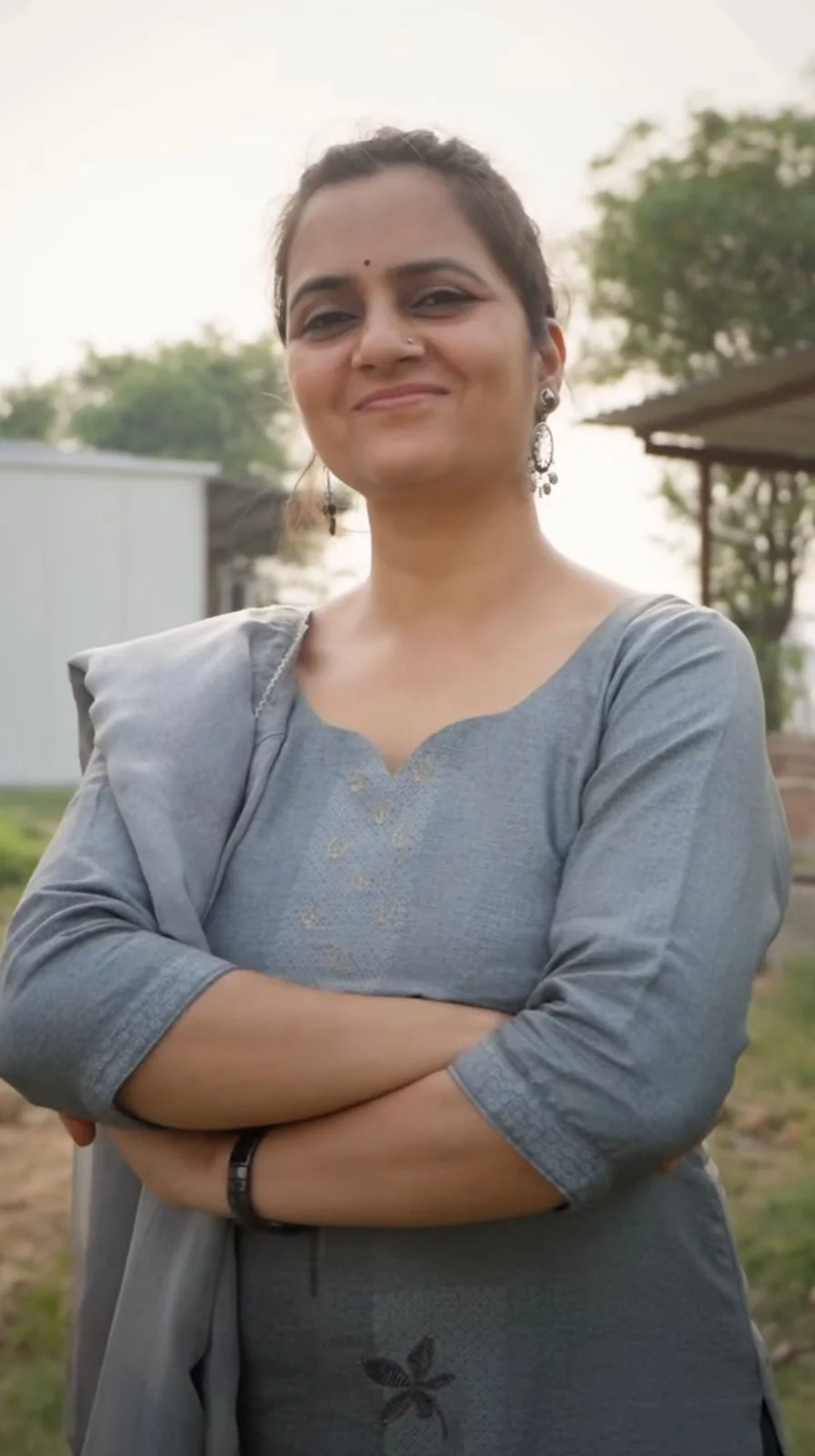
| Dr. Sonia Dahiya — live online | Online, from home | ₹1,499 | Full grow-and-sell process, with support |
| Jharkhand livelihood mission programmes | Group training, offline | Usually free | SHG members and rural collectives |
| ICAR-DMR Solan (HP) | Residential, national institute | Varies | Advanced and research-track learners |
Birsa Agricultural University at Kanke is Ranchi’s most important local resource and worth a visit for two reasons: it runs agricultural training and extension, and university and government channels are the usual reference point for reliable spawn in Jharkhand. Spawn quality is the single input a beginner cannot judge by eye, so knowing where good spawn comes from is worth as much as any lesson.
KVK Ranchi gives you the government certificate that strengthens subsidy applications, and if you are part of a self-help group, the state livelihood ecosystem regularly runs mushroom programmes at no cost.
What none of these typically cover in depth is the commercial half — costing a unit, pricing a crop, approaching a hotel purchase manager, planning cycles around a market calendar, and diagnosing a batch that has started to go wrong. Our ₹1,499 live online course is built around exactly that, taught live in Hindi and English, with WhatsApp support through your first batch. The combination that works best for Ranchi learners is a local institutional session for the technical grounding and spawn contacts, plus the online course for the business.
Our own hands-on farm training is at Sonipat, roughly 1,200 km away. We mention it for completeness, not as a recommendation — it is not worth that journey unless you are travelling to Delhi anyway.
The Chotanagpur plateau calendar
Setting
Chotanagpur plateau, around 650 m
Prime Button window
October – March
Summer strategy
Oyster; Milky in peak heat
Monsoon note
Heaviest contamination risk
October to March is your button window, and it is a good one. Plateau winter nights sit in button’s comfortable range for months, so two to three back-to-back cycles run on ambient temperature with no cooling equipment. If you are going to grow button at all, this is when.
April to June is the hot stretch. Ranchi is milder than the plains but still climbs into the high 30s°C. Button becomes impractical; oyster handles 20–30°C well with ventilation and misting, and milky mushroom covers the hottest weeks since it prefers 30–35°C.
July to September is the monsoon, and it is the section to read twice. Jharkhand gets a substantial, sustained monsoon, and the resulting ambient humidity is a double-edged thing: mushrooms like moisture, but so do the green moulds and bacteria that ruin batches. Three rules for these months — ventilate more, not less; keep substrate absolutely dry before pasteurisation; and cull any suspect bag the same day you notice it. Nearly every failed monsoon batch we hear about in eastern India traces back to one of those three.
Paddy straw and local substrate
Ranchi’s substrate story is straightforward and favourable. The paddy grown across Jharkhand leaves straw that is an excellent base for oyster mushroom — chopped to 3–5 cm, soaked, pasteurised in hot water or steam, and drained to the right moisture. It holds water well and colonises evenly, and after the kharif harvest it is abundant and cheap.
Two practical points that matter more here than elsewhere. First, paddy straw carries a heavier microbial load than wheat straw, so pasteurisation is not a step to rush — hold the temperature and the time properly or you will lose bags to competing moulds. Second, and specific to a high-rainfall state, collect and store your straw dry. Straw that has sat out through a monsoon shower is already colonised by something. Stack it covered, raised off the ground, in a ventilated space.
For button mushroom you will need proper compost, which is more involved: wheat straw is the classic base and is less abundant locally, so most small growers in Jharkhand either buy prepared compost or blend brought-in wheat straw with local material. This is a good question to take to BAU or KVK Ranchi, who will know current local practice.
One more thing worth knowing: spent substrate has value. After the last flush, what remains is a good organic soil amendment that vegetable growers and nurseries around Ranchi will take. It is a small second income and it keeps waste off your hands.
Which mushrooms suit Ranchi
Oyster mushroom is the right first crop for most Ranchi beginners, and we would say that more strongly here than for most cities. It grows on the paddy straw you have in abundance, needs the least equipment, tolerates the widest temperature range, moves through a cycle in six to eight weeks rather than ten, and forgives the small mistakes every beginner makes. It sells at roughly ₹180–260/kg locally to restaurants, hotels and health-conscious households.
Button mushroom is the higher-value winter crop at ₹160–220/kg, with a longer plateau season than the surrounding plains enjoy. It needs compost rather than plain straw, so it is a step up in complexity — take it on once oyster has taught you to read a crop.
Milky mushroom fills the hot April–June gap and has the useful property of a longer shelf life than oyster, which matters when your buyers are spread across a city with slow logistics.
Exotics are a distant consideration in Ranchi — the premium restaurant base is still small. Build on oyster and button first.
Who buys mushrooms in Ranchi
- Hotels and restaurants. Ranchi’s hospitality trade, serving government, business and event traffic, buys mushrooms regularly and is the channel most obviously underserved by fresh local supply. Lead with freshness: you can deliver in the morning what a wholesaler delivers two days old.
- Institutional kitchens. Government offices, hospitals including the large medical campus, universities and hostels feed thousands daily through contract caterers who buy vegetables on standing orders — the steadiest volume in the city.
- Caterers and event kitchens. Wedding and function catering has predictable winter peaks that line up with your best button cycles.
- Retail and neighbourhood grocers. Ranchi’s market and colony shops will take packed, labelled produce, and modern grocery outlets are expanding.
- Direct-to-home. A WhatsApp list of households buying weekly is the best-margin channel available and the easiest to start. In a city where mushrooms are already valued food, this builds faster than you would expect.
- Neighbouring towns. Ramgarh, Hazaribagh, Khunti and the industrial belt towards Jamshedpur are within reach and even less well supplied than Ranchi.
The Ranchi strategy that works: anchor on one institutional or hotel account for baseline volume, and build a household delivery list for margin. Do not lead with the wholesale mandi — in a market this thinly supplied, you have far better options.
Mushrooms as a group or SHG enterprise
Jharkhand has one of India’s more developed self-help group and rural livelihood ecosystems, and mushroom cultivation has become a common group enterprise within it for reasons that are worth spelling out, because they apply whether or not you are formally part of a group.
The capital requirement is small and divisible. A hundred oyster bags can be started for under ₹20,000. Split across four or five households, that is a genuinely low barrier — far lower than poultry, dairy or any land-based enterprise.
The work fits around a household day. Two short check-ins, morning and evening, with the heavy work concentrated on two or three days at the start of a cycle. That pattern suits women running households, which is precisely why SHG mushroom units have worked across the state.
Group buying cuts costs sharply. Spawn and straw both get cheaper in bulk, and a shared pasteurisation drum removes one of the larger individual capital items. Five households sharing equipment can each run a unit for a fraction of what one household would spend alone.
Volume unlocks better buyers. A single 100-bag unit cannot promise a hospital canteen 40 kg a week. Five units together can — and that is the difference between selling retail in a colony and holding an institutional contract.
The one thing groups must get right is consistency of practice. If one member’s bags are contaminated because they cut short the pasteurisation, the loss can spread to shared space and shared reputation. Train together, agree on a standard method, and inspect each other’s rooms honestly.
What a starter unit costs
| Component | Cost (INR) |
|---|---|
| Growing room (spare room, outbuilding or shared village space) | ₹0–₹3,500/month |
| Spawn, substrate & bags (100 bags, Oyster on paddy straw) | ₹5,500–₹9,000 |
| Racks, shelving or hanging frames | ₹5,000–₹9,000 |
| Blackout sheeting, ventilation, mister | ₹3,000–₹7,000 |
| Pasteurisation drum & basic tools | ₹4,000–₹7,000 |
| Packaging, crates & labelling | ₹3,000–₹5,000 |
| Climate control (optional, summer Button only) | ₹32,000–₹65,000 |
| Oyster start (100 bags) | ₹17,000–₹30,000 |
| Full year-round setup | ₹50,000–₹95,000 |
The oyster start is the honest recommendation for Ranchi: under ₹30,000, using local paddy straw, in a room you already have, with no cooling equipment. Shared across an SHG it drops further still.
Realistic returns
A 100-bag oyster cycle yields roughly 100–180 kg across flushes over six to eight weeks. At Ranchi rates of ₹180–260/kg sold direct, that is ₹18,000–₹47,000 per cycle against ₹5,500–₹9,000 of consumables. Because the cycle is short, five to six cycles a year are achievable if you keep the room working.
A winter button cycle of 100 bags yields 150–250 kg; at ₹160–220/kg that is ₹24,000–₹55,000 per cycle, with two to three cycles fitting October to March.
A realistic first year, run seriously with a mix of both, sits somewhere around ₹70,000–₹1,50,000 of gross margin from a single 100-bag room. That is a meaningful income in Ranchi from an enterprise that occupies one room and started for under ₹30,000.
The usual caveats hold: first-batch yields sit at the low end while you learn, and these figures assume direct selling. Also plan your logistics — mushrooms keep three to four days, and a city with dispersed buyers punishes growers who have not worked out their delivery route in advance.
Jharkhand subsidy and support
Mushroom cultivation is supported in Jharkhand through the central Mission for Integrated Development of Horticulture (MIDH), administered by the state horticulture department, typically with assistance of up to 50% of project cost for production units, plus provisions for spawn and compost facilities. Jharkhand has actively promoted mushrooms as a rural livelihood crop, and the state rural livelihood mission and its SHG network are often the most accessible route to support, training and revolving funds for a small group enterprise.
A KVK Ranchi certificate is the simplest credential to obtain and strengthens any application. Details are in our guide to mushroom farming subsidy schemes in India, and regional context is in the Jharkhand state guide.
Your first 60 days
- Days 1–7 — Learn. Take the live online course; contact BAU Kanke or KVK Ranchi about their next farmer session and about spawn sourcing.
- Days 7–14 — Prepare the room. Any space you can darken, ventilate and keep clean. A hundred oyster bags need about 100–150 sq ft with racks or hanging frames.
- Days 14–21 — Source straw and spawn. Dry paddy straw, stored covered and raised. Spawn from a known, reliable source — this is not the place to save money.
- Days 21–28 — Pasteurise and spawn. Chop, soak, pasteurise thoroughly, drain to correct moisture, mix spawn, fill bags. Work clean.
- Days 28–42 — Incubate. Dark, warm, undisturbed. Inspect daily; remove contaminated bags the same day.
- Days 42–55 — Fruit and harvest. Open the bags, raise humidity, increase air exchange and light. Oyster flushes come quickly and repeat.
- From day 30 — Sell. Visit hotels, caterers and a few restaurants while your bags are still colonising, and start a household WhatsApp list. Have buyers before you have mushrooms.
Mistakes Ranchi beginners make
Under-pasteurising paddy straw. The commonest failure in eastern India. Paddy straw needs full pasteurisation time and temperature; shortcuts show up as green mould two weeks later.
Storing straw through the rains. In a state with Jharkhand’s monsoon, uncovered straw is contaminated straw. Cover it, raise it, keep it dry.
Reducing ventilation in the monsoon. It feels intuitive when the air is already damp, and it is exactly wrong. More air exchange, not less.
Starting with button because it sounds more valuable. Button needs compost and tighter control. Start with oyster on local straw, learn the craft, then move up.
Selling only at the mandi. Ranchi’s hotels, canteens and households are underserved and pay considerably better. In a thin market, direct selling is where the whole advantage lies. For mushroom farming training near me around Ranchi, most results are short and introductory. The live online course runs the full cycle in three hours, with the last one reserved for your own plot, budget and buyers.
Start mushroom farming from Ranchi
Join the next live online batch — ₹1,499, 10 AM to 1 PM. Jharkhand’s plateau climate suits Oyster nearly year-round and Button through winter; the course teaches the winter Button crop.
Register for the online batch → Farm session — 4th Sunday monthly, ₹2,000WhatsApp: +91-9911552416
FAQs — mushroom farming training in Ranchi
Where can I learn mushroom farming in Ranchi?
Birsa Agricultural University at Kanke and KVK Ranchi are the local institutional routes, and BAU is also the usual reference point for reliable spawn in Jharkhand. Our live online course (₹1,499) covers the full commercial grow-and-sell process from home, with WhatsApp support through your first batch.
Does Ranchi’s climate suit mushroom farming?
Better than most of eastern India. At around 650 m on the Chotanagpur plateau, summers are milder and winter nights cooler than the Bihar and Bengal plains, giving a longer, more dependable Button window from about October to March.
Which mushroom should I grow first?
Oyster. It grows on the paddy straw you have locally, needs the least equipment, completes a cycle in six to eight weeks and forgives beginner errors. Move to Button in winter once you can read a crop.
Can I use paddy straw as substrate?
Yes — it is excellent for Oyster. Pasteurise it thoroughly, since it carries a heavier microbial load than wheat straw, and always collect and store it dry, especially through the monsoon.
Is mushroom farming profitable in Ranchi?
Yes, and unusually so, because much of the mushroom sold here is trucked in from other states. Genuinely fresh local supply commands a premium from hotels, canteens and households, and your substrate cost is among the lowest in the country.
Is this suitable for a self-help group?
Very. Low, divisible capital; work that fits around a household day; cheaper spawn and straw when bought in bulk; a shared pasteurisation drum; and enough combined volume to hold an institutional contract that no single unit could supply.
How much money do I need to start?
An Oyster start is roughly ₹17,000–₹30,000 for 100 bags, less if equipment is shared. A full year-round setup with cooling for summer Button runs ₹50,000–₹95,000.
Is the training in Hindi?
Yes — sessions run in Hindi and English, and you can ask questions in whichever you are comfortable with.
State-level guide
For a Jharkhand-wide view of climate, district markets, subsidy schemes and scaling, read our mushroom farming in Jharkhand guide.
Related reading