Chapter 7 · Harvest, grading & packing
Harvesting is the moment every earlier chapter has been working towards, and it is also the moment when a good crop can still lose much of its value. A button mushroom picked an hour too late, bruised in the crate, or left in a warm shed before it reaches the cold room sells for less than the same mushroom handled well. This chapter covers when and how to pick, then everything that happens between the bed and the buyer: cleaning, grading, packing and storage.
Button mushrooms are ready for harvest when the caps are fully developed but still closed. Picking usually starts 18 to 21 days after casing, and several flushes are taken from one crop. Throughout all of it, one rule holds: timely harvesting improves quality and market value.
TimingWhen a button mushroom is ready
Look underneath the cap. On a young button mushroom, a thin membrane called the veil stretches from the edge of the cap to the stem, hiding the gills. As the mushroom matures, the cap expands, the veil stretches, and eventually it tears, the cap opens out, and the dark gills appear. For the white button market, the mushroom should be picked while the cap is fully formed, firm and white, and the veil is still intact.
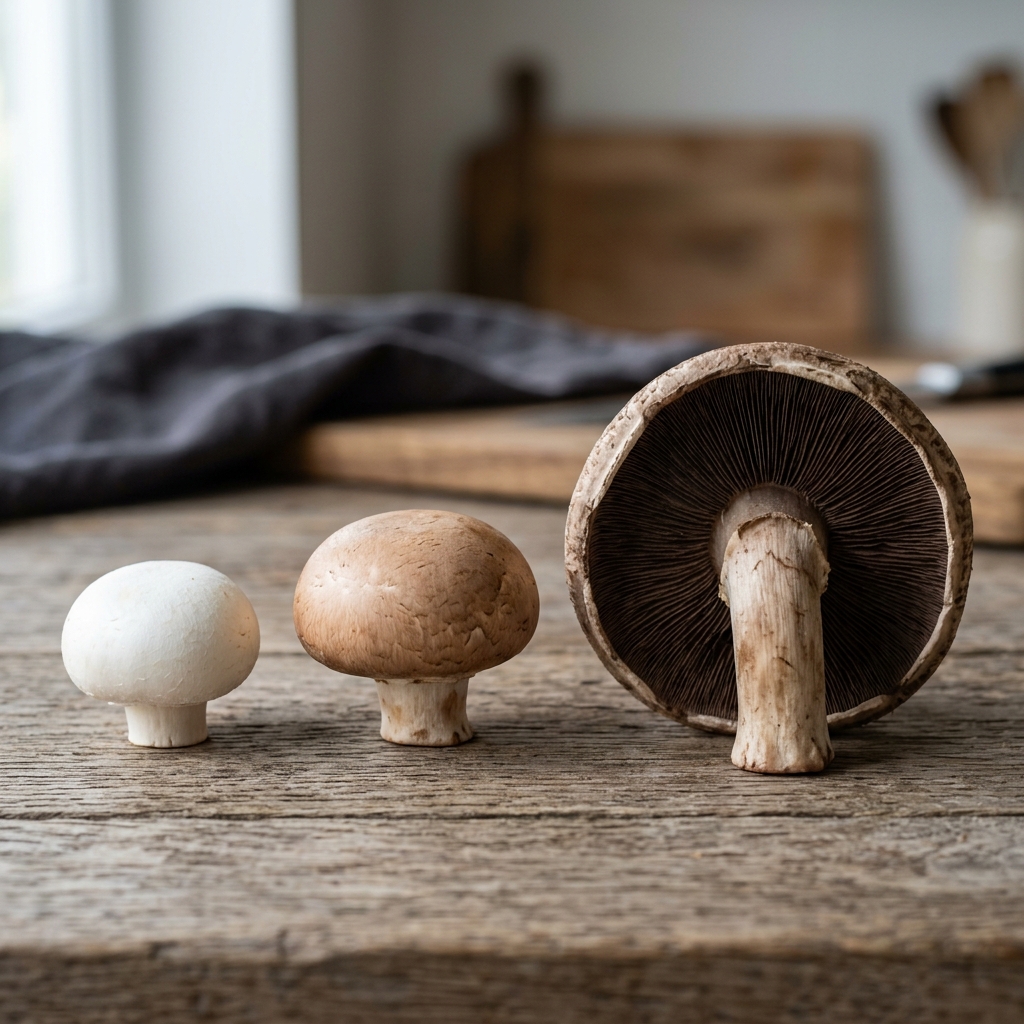
The tricky part is how fast this happens. During a flush, button mushrooms can grow noticeably in a single day, and a cap that was tight and closed in the morning may have opened by the next. That is why rooms in flush are picked every day, and at the peak of a flush often twice a day. Picking slightly early costs a little weight; picking late costs grade, price and sometimes the sale.
Ready to pick
- Cap fully formed, round and firm
- Veil intact, no gills visible
- White, clean surface
- Short, thick stem
Too late
- Veil torn, cap opening
- Pink or dark gills showing
- Cap flattening out
- Lighter, softer mushroom
TechniqueHow to pick button mushrooms
Mushrooms are gently twisted and pulled by hand. It sounds simple, and it is, but doing it the same careful way thousands of times a day is what keeps the bed productive for the next flush.
- Hold the cap lightly
Take the cap between your fingertips. Do not squeeze: button mushrooms bruise easily, and every fingerprint turns brown within hours.
- Twist and lift
Give the mushroom a gentle twist and lift it out. Twisting breaks it cleanly from the mycelium. Pulling straight up tends to lift a lump of casing with it and disturb the small pins growing around it.
- Mind the neighbours
Where mushrooms grow in a cluster, support the small ones with one hand while you twist out the large ones, or pick the whole cluster if they are all near ready.
- Trim the stem end
Cut away the soiled base of the stem with a clean, sharp knife, so that no casing goes into the crate.
- Place, do not drop
Lay each mushroom in a clean crate or basket, caps up, in shallow layers. Mushrooms at the bottom of a deep, heavy pile are crushed and bruised.
If you find mushrooms with disease, do not pick them in the normal run. Finish picking the healthy crop, then deal with the diseased ones separately, into their own container, and wash your hands before touching anything else. One picker can spread dry bubble across a whole room in a morning.
After each picking, clear stumps, broken pieces and small dead mushrooms from the beds. Anything left on the casing rots and feeds disease, and it gets in the way of the next flush.
The first hourHandling straight after picking
A mushroom does not stop living when it is picked. It goes on breathing, losing water and using up its own reserves, and it does all of these faster the warmer it is. Button mushrooms are highly perishable: at room temperature in summer, a picked mushroom starts to brown and soften within hours.
- Move full crates out of the growing room to the packing area promptly. Do not leave them standing in a warm corridor.
- Get the mushrooms into cold storage at 2–5°C as soon as you can, ideally within an hour of picking.
- Handle them as few times as possible. Every transfer from one container to another is another chance to bruise.
- Keep them out of direct sun and away from hot vehicles.
SortingCleaning and grading
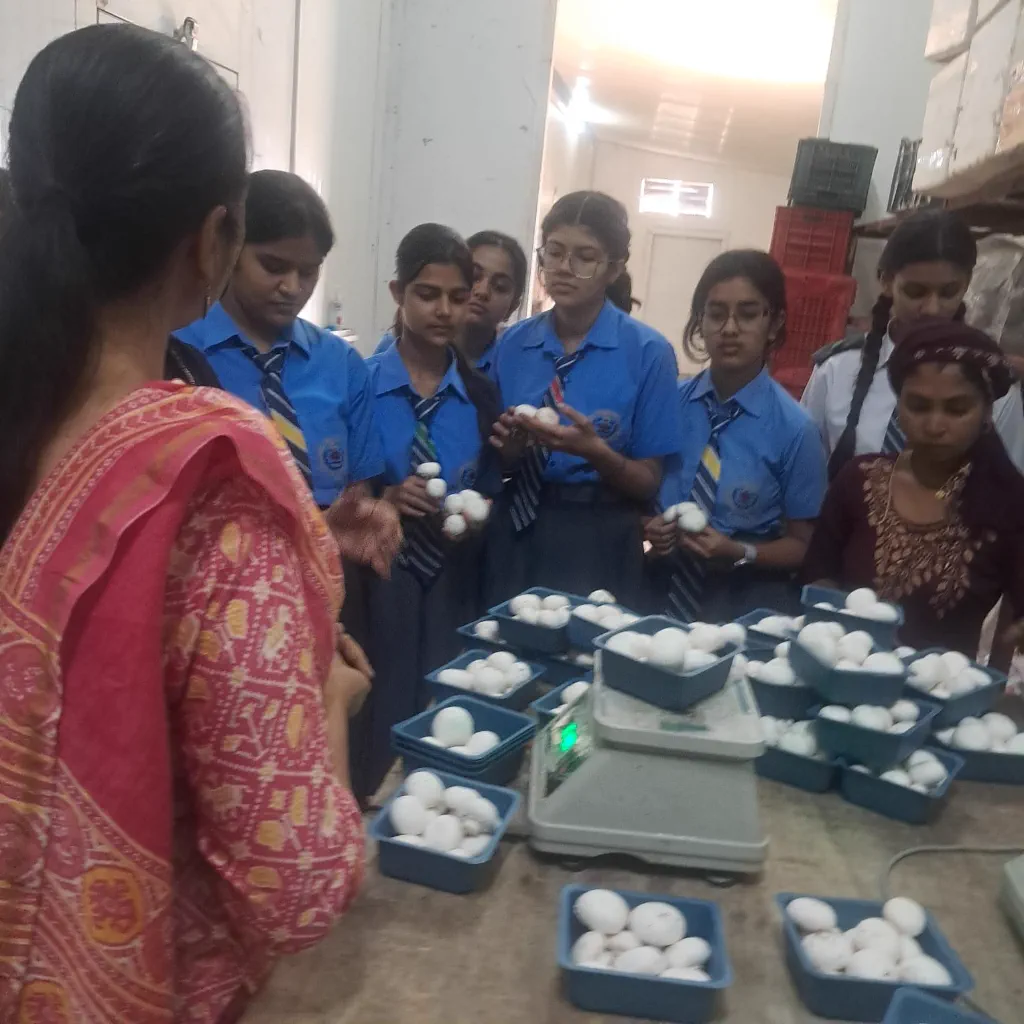
After harvesting, remove soil particles carefully, sort the mushrooms by size and quality, and pack them for sale. Cleaning means trimming any stem ends that were missed in the room and gently brushing off loose casing. Do not wash fresh button mushrooms before selling them. Water on the cap speeds up browning and spoilage, and wet mushrooms look worse in a day than dry ones do in three.
Grading matters because different buyers want different things, and a mixed box sells at the price of its worst mushrooms. A simple three-grade system works well for most small farms:
| Grade | What goes in it | Best buyers |
|---|---|---|
| Grade A | Closed, white, firm, clean caps of even medium size, with short trimmed stems | Supermarkets, retail shops, packed punnets |
| Grade B | Closed or just opening, larger or slightly uneven, minor marks | Hotels, restaurants, caterers, wholesale |
| Grade C | Open caps, broken or misshapen mushrooms, slight discolouration | Processing: pickles, drying, powder, soups |
Grade C is not waste. Chapter 9 describes the value-added products that turn the mushrooms you cannot sell fresh into income.
For the marketPackaging
Pack the mushrooms in trays or punnets for sale. The right pack depends on the buyer:
- Retail punnets of 200 g or so, the most common pack for shops and supermarkets, with packs up to 500 g for larger households. They are usually covered with perforated cling film, which keeps the mushrooms from drying out while still letting them breathe.
- Crates or boxes of a few kilograms for hotels, restaurants, caterers and wholesale buyers, lined and not overfilled.
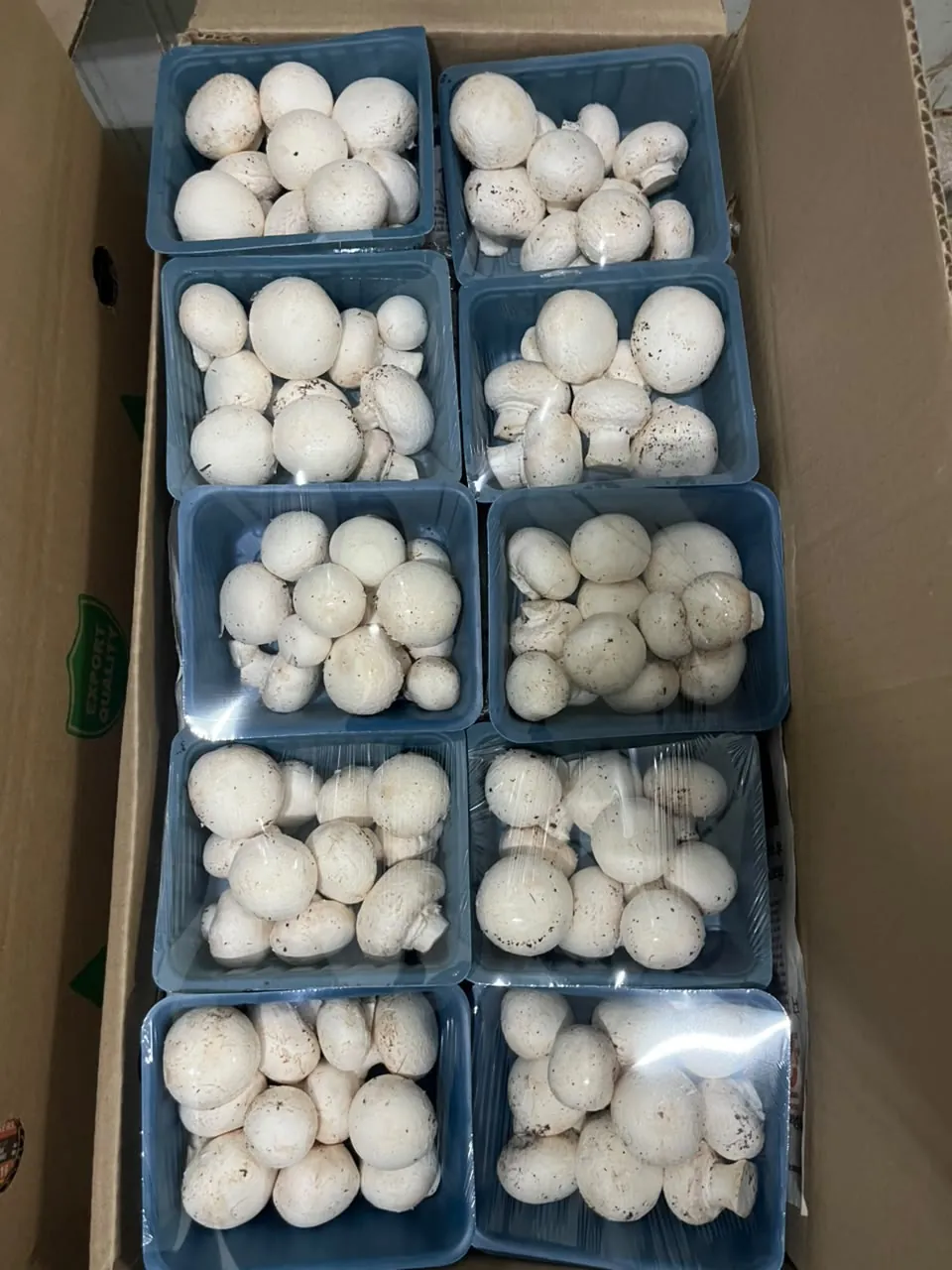
Never seal fresh mushrooms in an airtight bag. They are still breathing, and in a sealed bag they use up the oxygen and spoil. Label every pack or box with your farm's name, the weight and the packing date. A clear label is the cheapest marketing you will ever do, because it tells a shopkeeper's customer where good mushrooms come from.
Cold chainStorage and transport
Button mushrooms should be stored at 2–5°C for freshness. At that temperature they keep their colour and firmness for several days; without cooling, in an Indian summer, they may not last a single day in good condition.
- Keep the cold room steady. Temperature swings cause condensation on the mushrooms, and wet mushrooms spoil quickly.
- Keep humidity high in the store, so that the mushrooms do not dry, shrink and lose weight.
- Do not overstack. Leave space between crates for cold air to reach every one.
- Dispatch early. Deliver in the cool of the morning, and in an insulated or cooled vehicle where you can.
- First in, first out. Always send the oldest stock first.
Protecting the priceWhat makes buyers pay less
Buyers rarely argue about the price of a box of tight, white, evenly sized mushrooms delivered cold and on time. They argue about everything else. The usual reasons a grower gets a lower price are:
- open caps and visible gills, from picking too late;
- brown marks and bruises, from rough picking or packing;
- dirty stems with casing still attached;
- wet or washed mushrooms;
- mixed sizes in one box;
- warm mushrooms, or deliveries that arrive late in the day.
Every one of these is under your control, which is why post-harvest handling deserves as much attention as growing.
Know your numbersWeigh and record every flush
Weigh each day's harvest from each room and write it down by flush. At the end of the crop, divide the total weight of mushrooms by the weight of compost you filled. That is your yield as a percentage of compost weight: a crop that gives 2 kg of mushrooms from each 10 kg bag has yielded 20%, which is within the 18–22% range used for planning in this booklet. Over a few crops, these numbers tell you which compost, which season and which changes in management actually paid, and they are the basis of the cost and profit sums in Chapter 10.
FAQQuestions about harvesting
When should button mushrooms be harvested?
Harvest button mushrooms when the cap is fully developed, firm and white but still closed, with the veil under the cap unbroken. Picking usually starts 18 to 21 days after casing. Rooms in flush are picked every day, and often twice a day at the peak, because caps can open within a day.
How do you pick button mushrooms?
Hold the cap lightly with your fingertips, give it a gentle twist and lift it out. Twisting breaks it cleanly from the mycelium without lifting the casing or disturbing the small pins around it. Then trim the soiled stem end with a clean, sharp knife.
At what temperature should fresh button mushrooms be stored?
Store fresh button mushrooms at 2 to 5 degrees Celsius, with high humidity, as soon as possible after picking. Keep the temperature steady to avoid condensation, and never seal them in airtight bags.
Should button mushrooms be washed before selling?
No. Water on the caps speeds up browning and spoilage. Trim the stem ends and brush off any loose casing instead, and keep the mushrooms dry and cold.
How many times can button mushrooms be harvested from one crop?
Several flushes are picked from one crop, usually three or four over three to four weeks, with about a week between flushes. Each flush is picked over a few days.
What can I do with open or broken button mushrooms?
Grade them separately and use them for value-added products such as pickles, dried mushrooms, mushroom powder or soup mixes, or sell them to buyers who cook with them the same day. Mixing them into boxes of good mushrooms lowers the price of the whole box.

Written by Dr. Sonia Dahiya
PhD in biotechnology and founder of Dr. Dahiya Mushroom Farm (Shroomy Delights Agro Tech) in Barwasni, Sonipat, known as the “Mushroom Lady of Haryana”. This booklet comes from her years of growing, training and helping farmers set up button mushroom units. About Dr. Sonia →