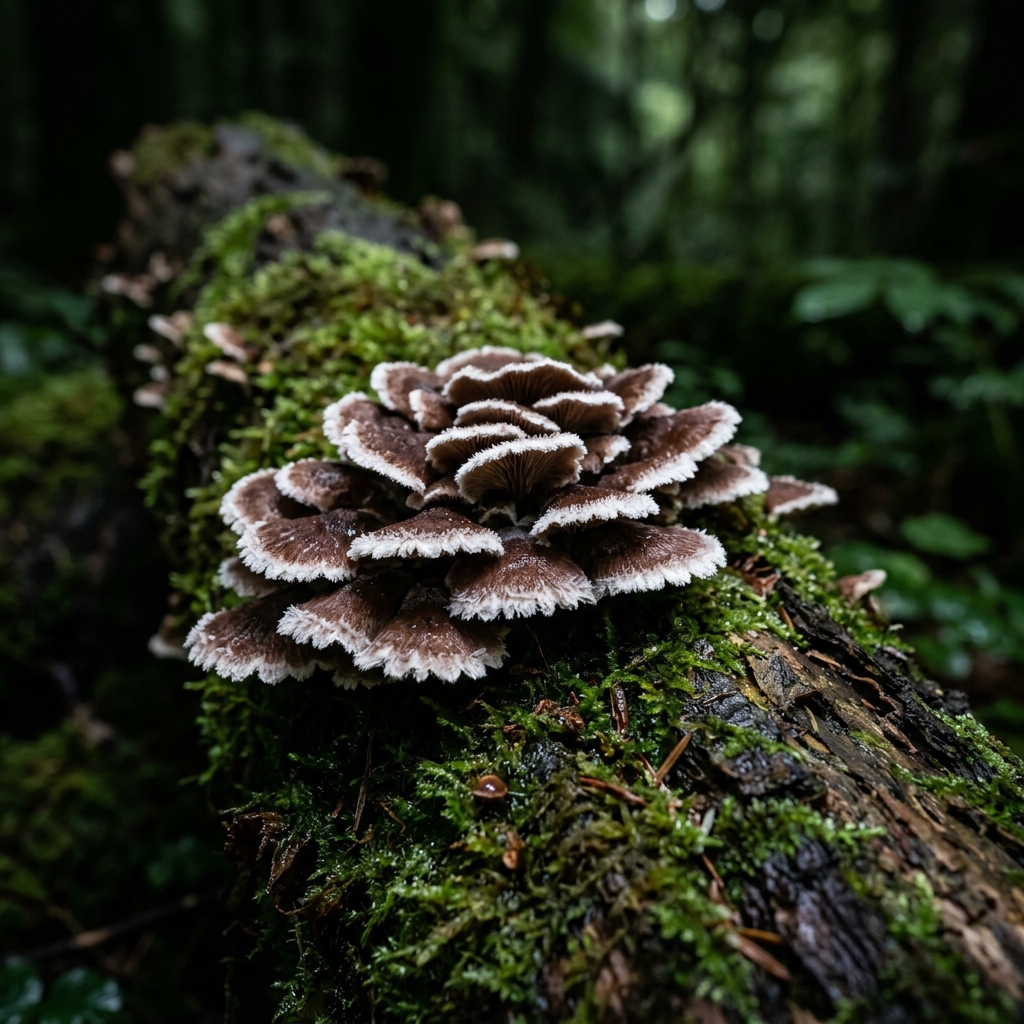
Mushrooms 'Talk' With One Another Using 50 Different Words
We often think of plants and fungi as silent, passive creatures — rooted in place, responding to the world but never speaking to it. A remarkable study published in the peer-reviewed journal Royal Society Open Science has quietly dismantled that assumption. Researchers recorded electrical signals passing through the thread-like structures of fungi and found something stunning: the patterns look eerily like language.
What Are Fungal Hyphae?
Before we dive into the language, it helps to understand the messenger. Beneath every mushroom you see above ground lies a vast hidden network called the mycelium — a web of microscopic filaments called hyphae. These hyphae spread through soil, wood and leaf litter, branching out to explore, absorb and connect. A single teaspoon of healthy forest soil can contain hundreds of metres of fungal hyphae. They are the internet cables of the natural world — and it turns out they carry signals too.
Tiny Electrodes, Big Discovery
The study, led by Professor Andrew Adamatzky at the University of the West of England, used hair-thin platinum electrodes to eavesdrop on the electrical activity inside four different species of fungi — including the ghost fungus (Omphalotus nidiformis) and the caterpillar fungus (Enoki). What the electrodes picked up was not random electrical noise. The signals clustered into repeating patterns — discrete spikes of electricity that came and went, grouped in ways that bore a striking mathematical resemblance to human language and the way words are distributed in spoken sentences.
What Could Fungi Be Saying?
The honest scientific answer is: we do not yet know. But researchers have compelling theories:
- Food signals: When hyphae encounter a rich new nutrient source — decaying wood, organic matter — they may send electrical pulses to alert other parts of the mycelium network, directing growth resources towards the food.
- Injury alerts: When a fungal thread is damaged or cut, the injury may trigger electrical signals that travel through the network, prompting neighbouring hyphae to respond — similar to pain signals in animals.
- Environmental sensing: Changes in moisture, temperature or light could trigger characteristic electrical signatures, allowing the whole network to "know" that conditions have changed.
- Coordination of fruiting: The timing of mushroom formation — the decision to push up a fruiting body — may be partly orchestrated by electrical messaging within the mycelium, synchronising effort across the network.
Are Fungi Really "Talking"?
Scientists are careful with the word "language." Professor Adamatzky himself notes that the electrical patterns could be purely physiological — a side-effect of metabolic processes rather than deliberate communication. The patterns resemble language statistically, but resemblance is not proof of intent. What is beyond doubt, however, is that fungi produce complex, structured electrical signals, and that those signals travel through the mycelium in organised ways. Whether that qualifies as communication or simply as information transfer, the result is the same: the fungal network is far more dynamic and interconnected than we ever imagined.
Why This Research Matters
Beyond the sheer wonder of the discovery, fungal communication research has real-world implications:
- Agriculture: Understanding how mycelium networks signal stress, disease or nutrient deficiency could lead to entirely new ways of monitoring crop and soil health — listening to the fungal network rather than pulling soil samples.
- Computing: Researchers are already exploring whether fungal mycelium can be used as a biological computing substrate — a living circuit board where electrical patterns carry and process information.
- Medicine: Fungal signalling pathways may share evolutionary roots with signalling in plant and even animal cells, opening new windows into how biological communication systems evolved.
- Ecology: The famous "wood wide web" — the network of mycorrhizal fungi that connects trees in a forest — could carry far richer information than previously suspected, helping forests respond collectively to drought, disease or attack.
The Bigger Picture: A World That Listens
This discovery sits alongside a growing body of evidence that life communicates in ways we are only beginning to measure. Plants release chemical distress signals when attacked by insects. Trees share sugars through fungal networks. Slime moulds solve maze puzzles. And now fungi send electrical vocabularies through kilometres of underground hyphae. The natural world is not silent — we simply lacked the instruments to hear it. The more we listen, the more complex and interconnected the conversation turns out to be.
Next time you walk through a forest, or tend to your mushroom cultivation block, remember: beneath your feet, an ancient and elaborate conversation is already underway — 50 words at a time.