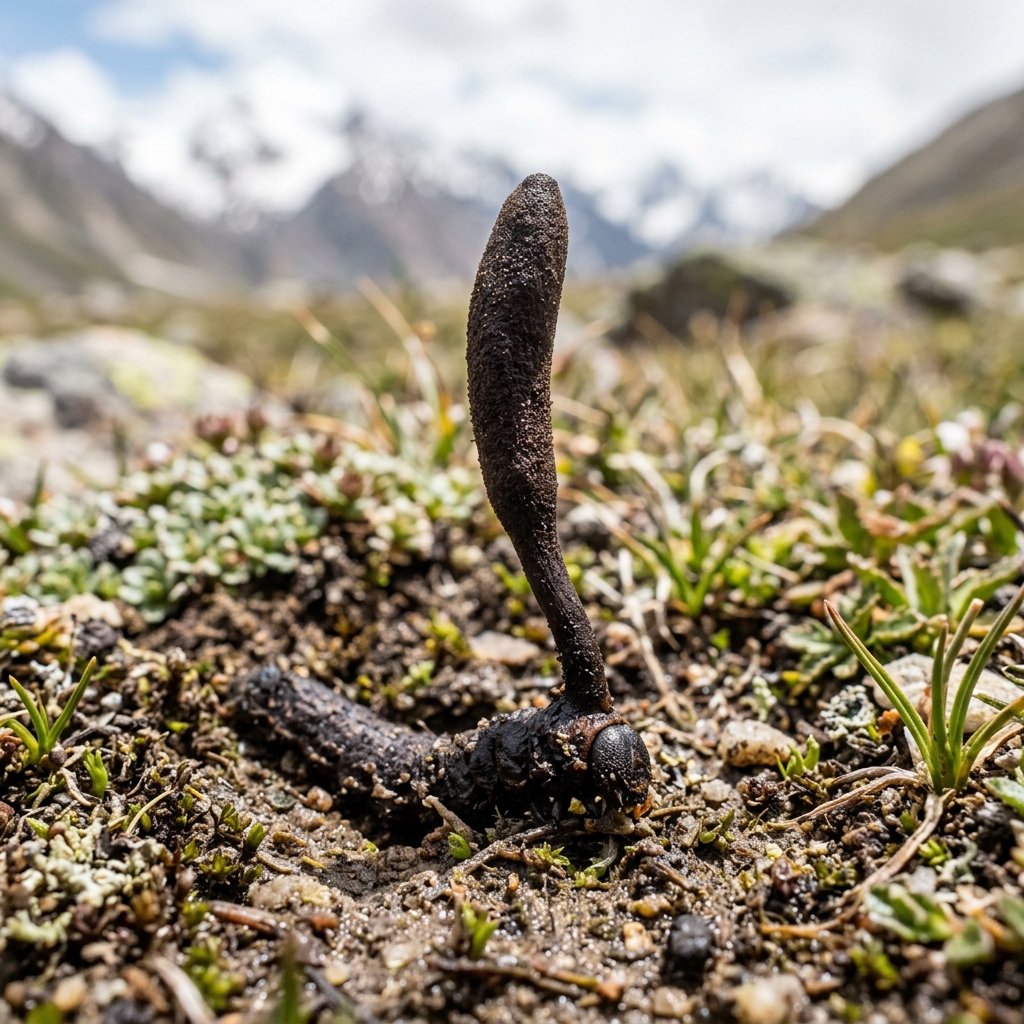
Caterpillar Fungus (Ophiocordyceps sinensis): The Himalayan Gold
In the high-altitude, windswept meadows of the Himalayas, a creature emerges every spring that blurs the line between the animal and fungi kingdoms. Known scientifically as Ophiocordyceps sinensis, and popularly referred to as the Caterpillar Fungus, Cordyceps, or Yartsa Gunbu, this organism is one of the most unique, bizarre, and expensive natural remedies in the entire world.
What Exactly Is It? A Sci-Fi Lifecycle
The lifecycle of the caterpillar fungus sounds like it was taken straight out of a science fiction movie. The cycle begins underground in the late autumn when microscopic fungal spores infect the caterpillars of the ghost moth (genus Thitarodes) as they burrow in the alpine soil.
Once inside the caterpillar, the fungus slowly consumes the insect's organs from the inside out while keeping it alive. The infected caterpillar slowly climbs upward towards the surface of the soil, dying just below the surface. The fungus then mummifies the host carcass, filling the hollow shell of the caterpillar with its mycelium networks to survive the freezing Himalayan winter.
Come spring, as the snow melts and the sun warms the alpine pastures, a dark, blade-like or club-like fruiting body (called the stroma) sprouts directly out of the dead caterpillar's head. It pushes through the alpine soil, appearing to the untrained eye like a tiny sprig of dry grass. The local harvesters must look extremely closely to spot these tiny shoots emerging from the ground.
Why Is It Called "Himalayan Gold"?
Because the caterpillar fungus is incredibly rare, grows only in a very specific climate, and can only be harvested by hand during a short window of a few weeks in spring, it commands astronomical prices.
In international markets, high-quality wild Yartsa Gunbu can sell for tens of thousands of dollars per kilogram—often surpassing the price of gold per gram. This high value has earned it the nickname "Himalayan Gold." For many remote mountain communities in Uttarakhand, Himachal Pradesh, Nepal, and Tibet, the annual harvesting season is the primary source of income for the entire year.
Key Health Benefits of Cordyceps
In Traditional Chinese Medicine (TCM) and Tibetan folk medicine, the caterpillar fungus has been prized for centuries as a powerful kidney and lung tonic, as well as a restorer of vital energy (Qi). Modern scientific research is beginning to validate several of these traditional claims, identifying active bio-compounds like cordycepin, adenosine, and unique polysaccharides:
- Enhanced Athletic Performance & Stamina: Cordyceps has been shown to increase the body's production of adenosine triphosphate (ATP), which is essential for delivering energy to muscles. This improves the way your body uses oxygen, especially during intense physical exercise.
- Adaptogenic & Anti-Fatigue Properties: As a natural adaptogen, it helps the body adapt to physical, environmental, and emotional stress, helping combat chronic fatigue and restoring vitality.
- Immune System Regulation: The beta-glucans and active cordycepin present in the fungus help modulate the immune system, strengthening immune defenses while reducing chronic inflammation.
- Powerful Antioxidants: Studies show that Yartsa Gunbu is packed with anti-aging antioxidants that neutralize free radicals, protecting cells from oxidative stress and damage.
- Respiratory Health Support: Traditionally used to treat asthma and bronchitis, modern research suggests it helps relax the bronchial walls, improving lung capacity and oxygen intake.
The Challenge of Sustainability
Due to its high commercial value, the pressure on wild populations of caterpillar fungus has increased dramatically over the last few decades. Over-harvesting, combined with the effects of climate change on the delicate alpine ecosystems of the Himalayas, has led to a decline in wild populations.
Conservationists and local governments are working together to establish sustainable harvesting guidelines, ensuring that enough fungi are left behind to release spores and secure future generations of this incredible natural wonder, while protecting the fragile Himalayan soil from erosion.