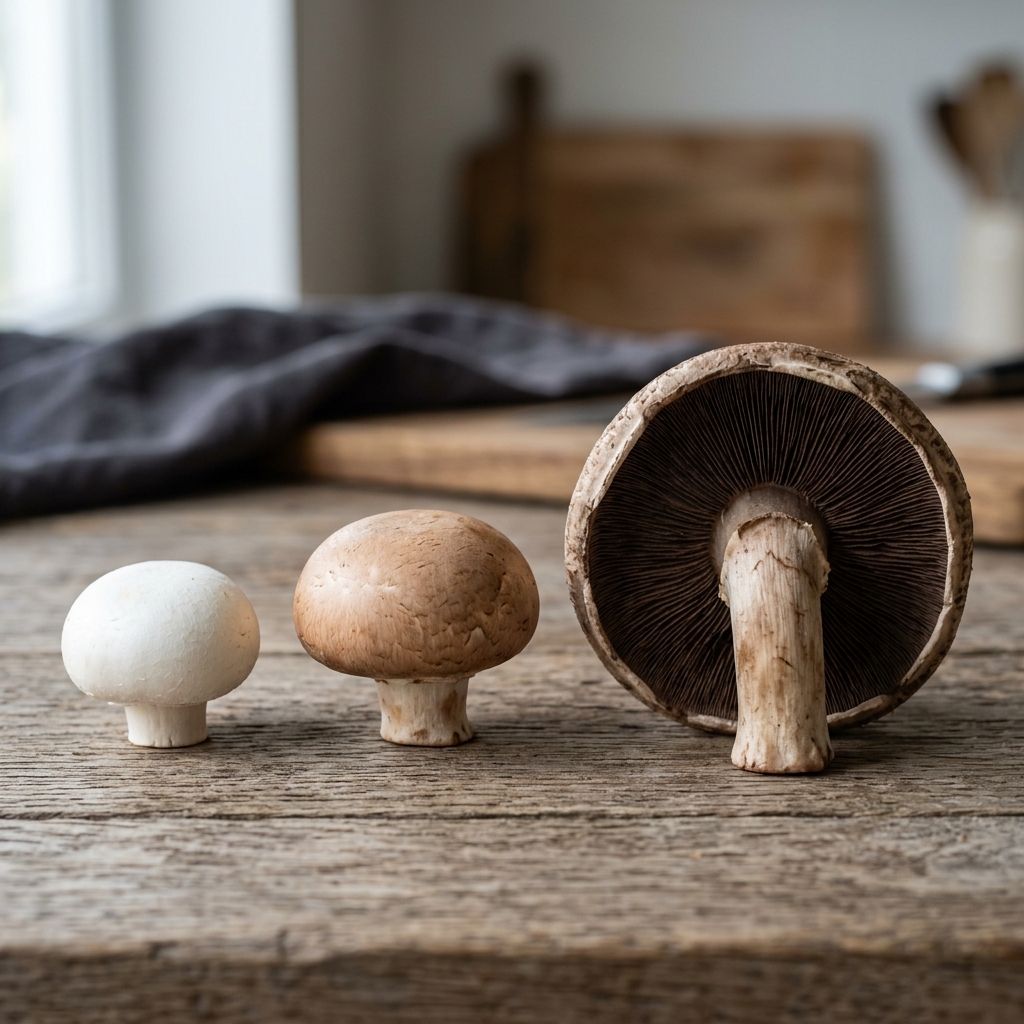
The Ultimate Mushroom Illusion: Button, Cremini, and Portobello
Walking down the grocery store aisle, you will see carton after carton of edible mushrooms: pristine white buttons, firm brown creminis (often sold as "baby bellas"), and giant, flat portobellos. To most shoppers, these look, taste, and cost like completely different species of fungi. But here is the ultimate mushroom illusion: they are all the exact same species of fungus, Agaricus bisporus.
The Three Growth Stages Explained
Just like a green bell pepper matures into a red one, the Agaricus bisporus fungus goes through three distinct stages of life, each prized for different culinary properties:
1. White Button (The Infancy Stage)
This is the most common mushroom in the world. It is harvested when the fungus is very young. The cap is small, round, and pristine white, and the veil underneath is completely intact, hiding the gills. Because of its youth, it has a high water content, a tender texture, and an exceptionally mild, subtle flavor that blends easily into any dish.
2. Cremini (The Teenage Stage)
Also sold as "baby bellas," brown button mushrooms, or Roman mushrooms, these are harvested just a few days later than white buttons. Creminis are a brown heirloom variety of the same species. As they grow slightly older, they lose a small amount of moisture, their texture becomes noticeably firmer, and their flavor deepens into a richer, woodier, and earthier umami note.
3. Portobello (The Adulthood Stage)
If the fungus is left in its growing bed for another week or two, it expands dramatically. The cap flattens out, growing up to 6 inches in diameter, and the protective veil tears open, fully exposing the dark brown gills underneath. During this final stretch, the mushroom loses a significant amount of water. This dehydration concentrates its flavor and tightens its fibers, giving the portobello a dense, meaty texture and an intensely savory, steak-like taste.
The Marketing Triumph of the Portobello
The story of how the portobello became a gourmet favorite is one of the most successful marketing campaigns in agricultural history.
For decades, white button mushrooms reigned supreme in Western supermarkets. Because they were white and clean, shoppers preferred them. When brown or oversized mushrooms cropped up in the growing beds, farmers considered them "defective." They were difficult to sell, and growers routinely threw them out or sold them for pennies.
In the 1980s, mushroom growers decided to rebrand these giant, mature brown mushrooms. They gave them an exotic-sounding Italian name—"Portobello"—and began marketing them to chefs and vegetarians as a premium, hearty meat substitute. The campaign was a massive success. Grilled portobello caps quickly became a staple vegetarian burger option, and today, they command a higher price than the button mushrooms they were once discarded for.
Nutritional Profile: How They Compare
Since they are the same species, all three stages share a similar nutritional DNA, but their maturation alters the concentration of nutrients:
- Moisture & Concentration: White buttons are roughly 92% water. Portobellos have less water weight, meaning you get more concentrated nutrients per gram.
- Antioxidants: All three contain high levels of L-ergothioneine and glutathione, powerful antioxidants that help fight cellular damage and aging.
- Potassium & Minerals: Portobellos have slightly higher mineral concentrations due to moisture loss. A single portobello cap can contain more potassium than a medium banana!
- Vitamin D: Fungi contain ergosterol, which converts to vitamin D when exposed to ultraviolet light. Because portobellos have exposed gills and a massive surface area, exposing them to sunlight before eating boosts their vitamin D content even more effectively than button mushrooms.
How to Cook Each Stage
To get the most out of your Agaricus bisporus, match the growth stage to your cooking method:
- White Button: Excellent sliced raw in salads, pickled in vinegar and herbs, or quickly sautéed in butter and garlic as a light side dish.
- Cremini (Baby Bella): The ultimate all-rounder. Perfect for hearty soups, stir-fries, risottos, and pasta sauces where you want the mushroom to hold its shape and add an earthy depth.
- Portobello: Best treated like a steak. Brush with olive oil and balsamic vinegar, then grill, roast, or stuff with cheese, herbs, and breadcrumbs for a satisfying main course.